
2026-09-19 · Daryl Henderson
Why Heavy Rain Can Contribute to Sewer Backups in Hattiesburg
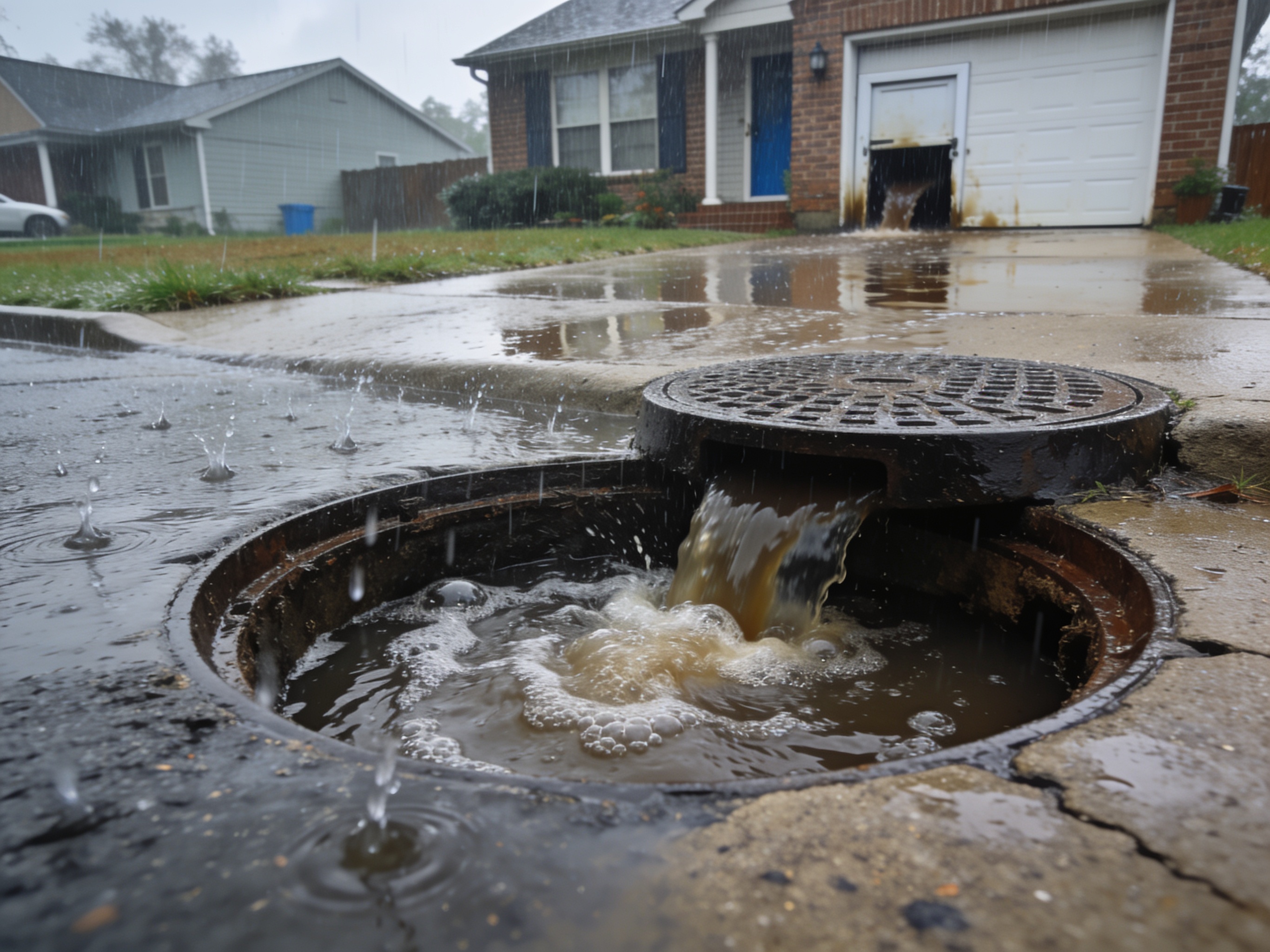
Heavy rain contributes to sewer backups in Hattiesburg when stormwater exceeds the capacity of aging combined sewer lines that serve neighborhoods such as University Heights and Oak Grove in Forrest County. In the humid subtropical climate, summer thunderstorms often drop several inches in a few hours, sending runoff across streets and yards that feeds directly into the same pipes handling household waste.
Hattiesburg Climate Patterns and Stormwater Volume
Hattiesburg receives frequent intense downpours during hot summer months and occasional winter rains that keep soil saturated. These events send large volumes of water across flat to gently rolling terrain near the Longleaf Trace and around the University of Southern Mississippi campus. When rain falls faster than the ground can absorb it, the excess flows into storm drains that share lines with sanitary sewers in many older sections of The Hub City. The added volume raises pressure inside the pipes until sewage finds the path of least resistance, often through floor drains or low-lying fixtures in homes built before modern separation standards. Properties near the Hattiesburg Zoo and along Oak Grove roads experience faster runoff because surrounding pavement and compacted yards limit natural infiltration.
Aging Infrastructure in Local Neighborhoods
Much of the sewer network serving University Heights, Arcadia-Sunset, and Kamper-Avenues dates to mid-century construction when pipe materials and joint seals were not designed for today's rainfall intensity. Tree roots common along the Longleaf Trace corridor and in yards throughout Parkhaven and The Oaks invade older clay or concrete lines, narrowing the interior diameter before any storm arrives. Once heavy rain begins, even modest additional flow pushes the restricted pipes beyond their limit. In Forrest County homes with crawl spaces or basements, the backup often surfaces first in the lowest plumbing points because gravity directs the pressurized mixture there. Residents along North Main Historic and Petal roads report repeated issues after the same storms that leave newer subdivisions unaffected.
How Terrain and Soil Conditions Worsen Backups
Forrest County's clay-heavy soils hold water near the surface during mild winters and after summer storms, reducing the ground's ability to accept additional rainfall. This saturation increases hydrostatic pressure against foundation walls and forces water into any crack or loose joint in the sewer lateral. Homes in University Heights built on slight slopes see water collect at the base of driveways and yards, where it enters cleanouts or vent stacks. The combination of high water tables and older laterals means that even a single afternoon thunderstorm can trigger sewage coming up through floor drains in multiple blocks at once.
Property owners facing these conditions often need targeted extraction and drying after the event. Sewage backup after heavy rain cleanup addresses the specific volume and contamination levels common here. Learning the immediate steps after an incident helps limit damage; see the guide on what to do immediately after a sewage backup. Understanding why sewage appears through floor drains during storms also clarifies the pattern for many Hattiesburg households.