
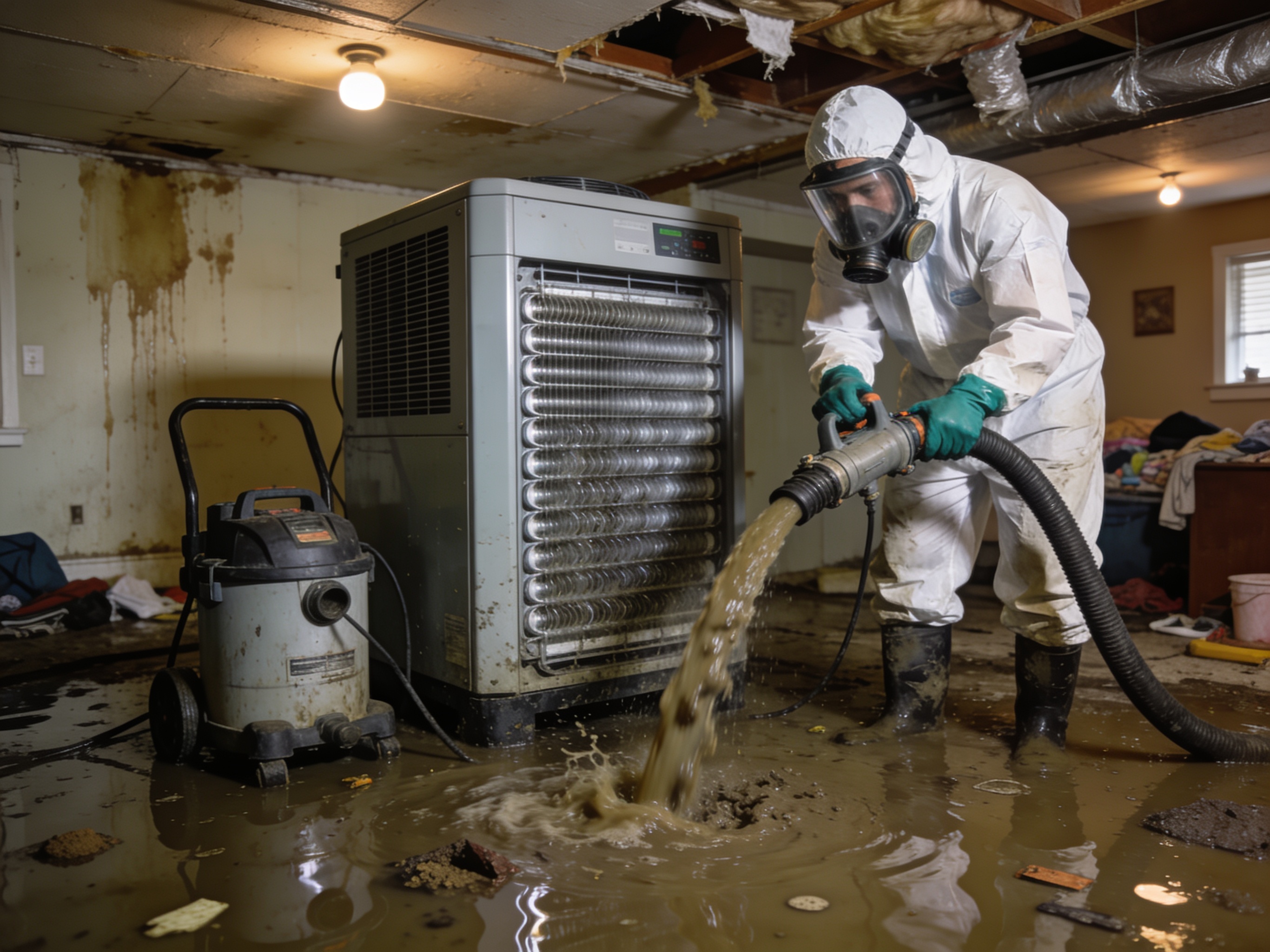
Hattiesburg homes in neighborhoods like University Heights and Oak Grove often feature older slab foundations and crawl spaces that trap sewage water after heavy rains common in the humid subtropical climate. Extraction crews must pull standing water from carpet pads, hardwood subfloors, and wall cavities before mold sets in, which happens faster here than in drier regions because of persistent humidity. Porous materials such as drywall and insulation in these houses frequently require removal rather than drying alone, especially when water has wicked upward from the slab.
Forrest County terrain near the Longleaf Trace and around the University of Southern Mississippi includes low-lying lots where stormwater combines with sewage backups, pushing contaminated water into finished basements or utility rooms. Technicians use moisture meters and infrared cameras to map hidden saturation behind cabinets and under appliances before starting drying equipment. Failure to address these pockets leaves residual moisture that reactivates odors weeks later when summer heat returns.
Drying protocols must account for mild winters that keep indoor humidity elevated even in January, slowing evaporation rates compared with colder climates. Crews run commercial air movers and dehumidifiers in staged patterns, checking readings daily until wood moisture content drops below 12 percent. Homes near the Hattiesburg Zoo sometimes sit on clay-heavy soils that hold water longer, requiring extended equipment runtime and more frequent filter changes on the extraction units.
Edge cases include sewage that has reached HVAC ducts in single-story Oak Grove residences, where negative air machines and duct cleaning become necessary before drying can finish. Crews also watch for compromised electrical outlets in older The Hub City properties, shutting off power and using GFCI-protected equipment to avoid hazards during extraction.
Technician insight
In Hattiesburg the thing that catches most people out with Sewage-Contaminated Water Extraction & Drying is the clay-heavy soil around Oak Grove that keeps crawl spaces damp for weeks after the initial pump-out. Homeowners often think once the water is gone the job is finished, but the humidity here means we have to run equipment longer than in drier counties or the moisture just cycles back into the wood framing.
University Heights Slab Leak Backup
Sewage backed up through floor drains into a 1960s slab home near the University of Southern Mississippi after heavy rain. Water had wicked into base cabinets and under the laundry room. Extraction removed the standing water, saturated drywall was cut out, and drying equipment ran for five days until moisture readings stabilized. The space passed final verification and was ready for cabinet replacement.
Sewage-Contaminated Water Extraction & Drying Services We Offer
✓Emergency Contaminated Water Pumping
Rapid removal of standing sewage water from floors and crawl spaces using truck-mounted pumps suited to Forrest County lots.
✓Moisture Mapping and Assessment
Infrared scanning and meter readings to locate hidden saturation in walls and subfloors of University Heights homes before drying begins.
✓Structural Drying with Dehumidification
Placement of commercial air movers and dehumidifiers calibrated for Hattiesburg's high humidity to bring wood and drywall back to safe moisture levels.
✓Porous Material Removal
Safe extraction and disposal of saturated carpet, pad, and insulation from Oak Grove properties where drying alone cannot restore the materials.
✓HVAC Duct Drying and Cleaning
Negative-air extraction and drying of contaminated ductwork in single-story homes near the University of Southern Mississippi.
✓Post-Drying Moisture Verification
Final meter checks and documentation confirming all surfaces in The Hub City residences meet industry dry standards before reconstruction.
Sewage-Contaminated Water Extraction & Drying Cost in Hattiesburg, MS
| Service | Typical Range | What Affects It |
|---|---|---|
| Small-room extraction and drying | $1,200–$2,400 | Single affected area under 200 sq ft with no HVAC involvement |
| Whole-home drying after backup | $3,500–$6,500 | Multiple rooms plus crawl space in older University Heights homes |
| Crawl-space extraction only | $900–$1,800 | Standing water removal and initial drying setup |
| HVAC duct drying add-on | $600–$1,200 | Negative air and duct cleaning when contamination reaches registers |
Ranges are typical for Hattiesburg, MS and confirmed with an exact written quote before any work starts.
How it works
- 1
Site Assessment
Technicians inspect the affected rooms, test moisture levels in walls and floors, and note any HVAC involvement in the specific Hattiesburg property.
- 2
Water Extraction
Standing sewage is pumped out using equipment sized for the volume found in slab or crawl-space homes common in Oak Grove and University Heights.
- 3
Material Removal
Saturated drywall, insulation, and flooring sections are cut out and bagged for disposal before drying equipment is positioned.
- 4
Drying And Monitoring
Air movers and dehumidifiers run with daily moisture readings until readings stabilize, accounting for local humidity patterns.
- 5
Final Verification
Final meter checks confirm dryness, and the space is cleared for any needed repairs or reconstruction.
Pricing
Pricing depends on affected square footage, water depth, and whether HVAC or crawl-space work is required; written estimates are provided before work starts.