
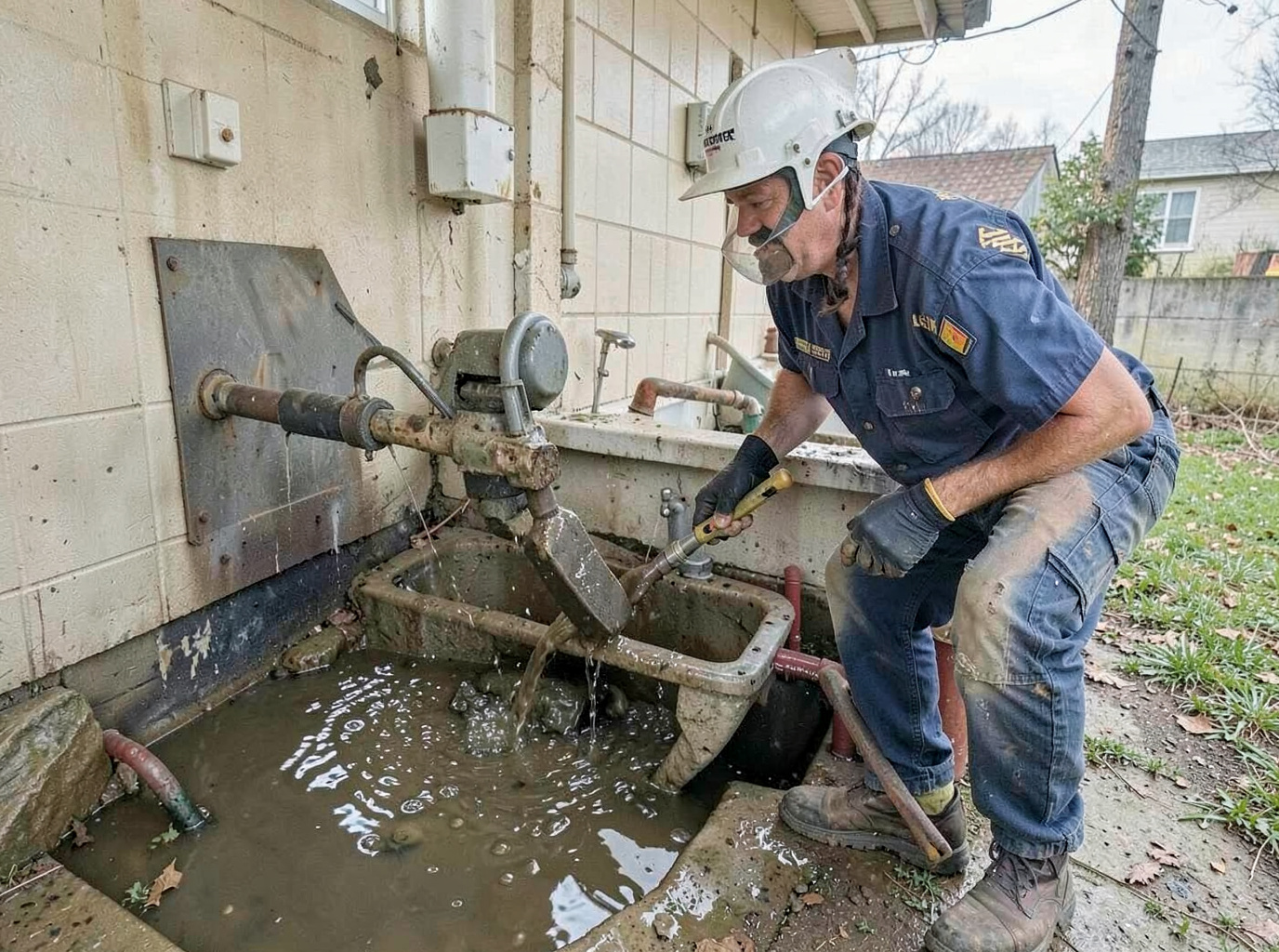
Hattiesburg homes built before 1970 in University Heights and around the University of Southern Mississippi often have cast-iron waste lines that crack under repeated toilet overflows. When water sits on hardwood or pier-and-beam floors during the long humid summers, mold sets in within 48 hours because the subtropical air holds moisture. Crews pull baseboards, run air movers under the structure, and treat joists with antimicrobial solution before any new flooring goes down.
In Oak Grove and along the Longleaf Trace corridor, many houses sit on clay soils that drain slowly after heavy rain. A single toilet backup can push contaminated water into crawl spaces where it mixes with groundwater seepage. Technicians use moisture meters on sill plates and install temporary dehumidifiers sized for the square footage rather than relying on whole-house units that cannot reach under the home.
Forrest County properties near the Hattiesburg Zoo frequently share sewer laterals with neighbors. When one line backs up, effluent can travel laterally through the clay pipe joints. Cleanup includes camera inspection of the shared line, isolation of the affected branch, and coordination with the city utility to avoid pushing waste into an adjacent yard during extraction.
After the visible water is removed, crews test remaining carpet pad and drywall for hidden saturation. In mild winters when temperatures stay above 50 degrees, evaporation slows and odors linger unless negative-air machines run for several days. Homeowners receive a written moisture log showing readings before and after drying so they can verify the work before any reconstruction begins.
Technician insight
In Hattiesburg the thing that catches most people out with Toilet Overflow Sewage Cleanup is how quickly the humid air lets mold reach the underside of hardwood floors in University Heights pier-and-beam houses. Homeowners often stop at visible water and miss the joists that stay damp for weeks when clay soil keeps moisture under the house.
Oak Grove Toilet Overflow Into Crawl Space
A homeowner in Oak Grove called after a toilet overflow reached the crawl space during a summer rain. Water had mixed with seepage under the clay soil and wicked into floor joists. Crews extracted the effluent, treated the timbers, and ran dehumidifiers for four days until moisture readings matched the dry standard. The family moved back in without odor or visible damage.
Toilet Overflow Sewage Cleanup Services We Offer
✓Bathroom Floor Extraction
Removes standing water and contaminated carpet or vinyl from toilet overflow events before humidity allows mold growth on subfloors.
✓Crawl Space Sewage Drying
Extracts effluent from pier-and-beam homes common in Oak Grove and treats joists to prevent structural rot in the area's clay soils.
✓Drywall and Baseboard Removal
Cuts and disposes of saturated drywall up to 12 inches above the water line to stop hidden mold behind walls in older University Heights houses.
✓Toilet Seal and Wax Ring Replacement
Replaces failed seals after overflow cleanup to stop recurring backups that travel through shared laterals in The Hub City.
✓Odor Neutralization Treatment
Applies hospital-grade deodorizers and runs HEPA air scrubbers until readings return to normal in humid subtropical conditions.
Toilet Overflow Sewage Cleanup Cost in Hattiesburg, MS
| Service | Typical Range | What Affects It |
|---|---|---|
| Minor Toilet Overflow On Tile | $450–$750 | Single bathroom, no subfloor damage, one-day extraction. |
| Crawl Space Sewage Cleanup | $900–$1,600 | Includes extraction, antimicrobial spray, and multi-day drying in clay-soil homes. |
| Full Bathroom With Drywall Removal | $1,200–$2,100 | Cut and haul saturated walls plus floor extraction in pre-1970 homes. |
| Odor Treatment Add-On | $250–$400 | Extra HEPA scrubbing when humidity keeps odors trapped after initial drying. |
Ranges are typical for Hattiesburg, MS and confirmed with an exact written quote before any work starts.
How it works
- 1
Site Assessment
Technician arrives at the address, locates the overflow source, and maps water migration through flooring and walls using moisture meters.
- 2
Containment And Extraction
Sets up plastic barriers, pumps out visible sewage, and removes saturated materials to prevent cross-contamination to unaffected rooms.
- 3
Structural Drying
Places air movers and dehumidifiers sized for the space, then monitors daily moisture readings until the structure returns to pre-loss levels.
- 4
Final Sanitation And Documentation
Applies antimicrobial solution, runs a final odor check, and provides the homeowner with a moisture log for insurance or resale records.
Pricing
Cost depends on square footage affected, depth of water into subfloors, and number of days required to reach dry standards in local humidity.