
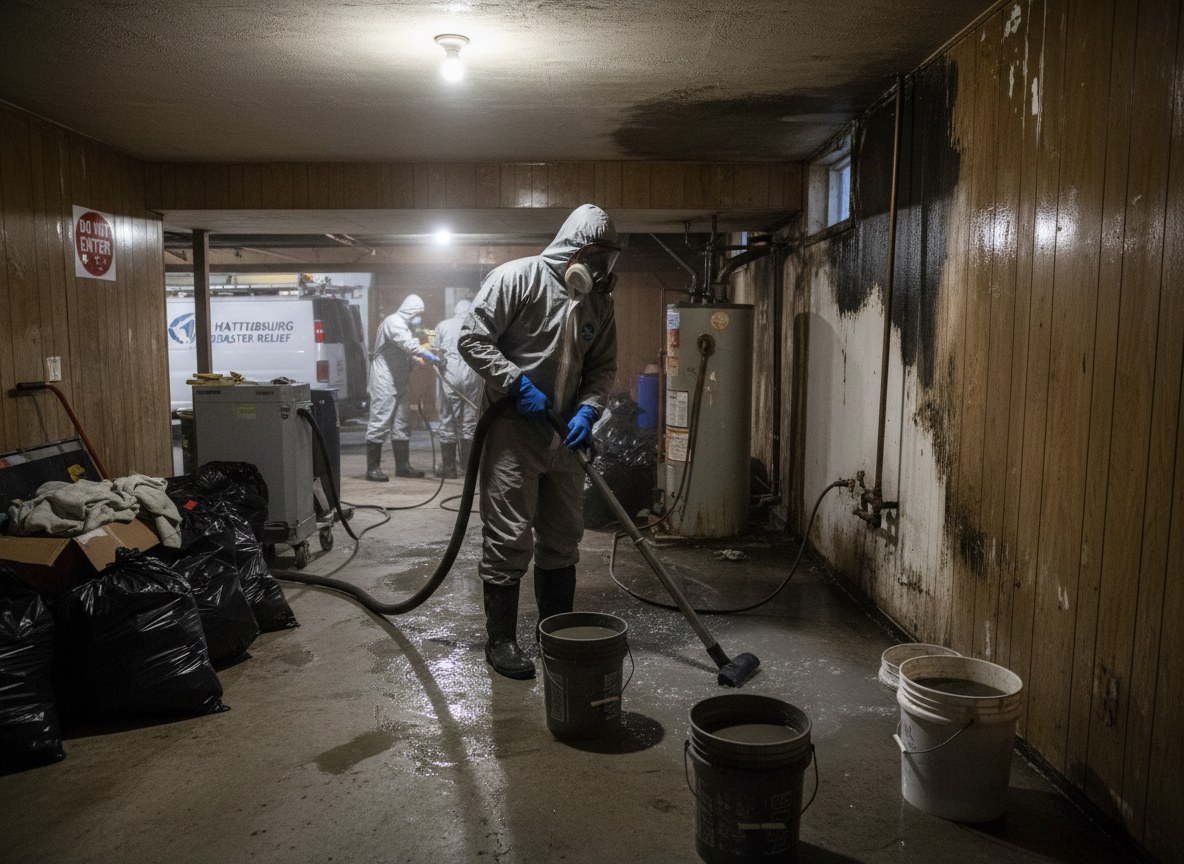
Hattiesburg's humid subtropical climate brings frequent heavy downpours that overwhelm older clay and cast-iron lines in University Heights and Oak Grove. When backups return within weeks, the cause is rarely just a simple clog. Tree roots along the Longleaf Trace corridor and shifting soils near the University of Southern Mississippi push into joints, creating paths that reopen after every storm. We map these patterns during every job because surface cleaning alone leaves the underlying break untouched.
Forrest County homes built before 1970 often have 4-inch mains that were never designed for today's water volume. Recurring backups in these properties usually trace to bellied pipe sections or offset joints where the line drops under driveways or sidewalks. We use camera inspection to locate the exact failure point rather than guessing from the cleanout. This prevents repeated flooding that can reach finished basements near the Hattiesburg Zoo area.
After the initial extraction and disinfection, we focus on the repair that stops the cycle. In many Oak Grove properties the fix involves sectional pipe bursting or cured-in-place lining to avoid digging up established landscaping. Homeowners who skip this step watch the same backup return the next time temperatures drop and condensation increases flow through the line.
We also check for illegal or deteriorated cleanout caps that allow rainwater to enter during summer storms. Replacing these with sealed, traffic-rated covers has eliminated repeat calls for several University Heights addresses where surface water was the hidden trigger.
Technician insight
In Hattiesburg the thing that catches most people out with recurring sewage backup cleanup is the old clay lines under University Heights and Oak Grove that shift after every heavy summer rain. Homeowners keep calling for extraction when the real problem is a belly or root penetration that only shows up on camera after the water recedes.
Repeat backup after heavy rain in Oak Grove
A homeowner on a side street near the Longleaf Trace reported sewage returning to the same floor drain two weeks after the first cleanup. Camera work showed a root mass at a joint 18 feet from the cleanout where an oak had grown under the sidewalk. We performed sectional lining on the damaged section and replaced the cleanout cap. No further backups occurred through the next rainy season.
Recurring Sewage Backup Cleanup Services We Offer
✓Root Intrusion Removal
Hydro jetting and root cutting to clear recurring blockages caused by trees common along Longleaf Trace and in Oak Grove yards.
✓Sewer Camera Inspection
Full-line video inspection to identify bellies, offsets, and root entry points that cause repeat backups in older Forrest County homes.
✓Sectional Pipe Lining
Trenchless repair that seals recurring leak points without disturbing established yards in University Heights and The Hub City.
✓Backflow Valve Installation
Placement of check valves to prevent sewage re-entry during heavy rains that affect low-lying areas near the University of Southern Mississippi.
✓Cleanout Cap Replacement
Upgrade of deteriorated or missing cleanout covers that allow stormwater to trigger repeated backups during humid subtropical storms.
Recurring Sewage Backup Cleanup Cost in Hattiesburg, MS
| Service | Typical Range | What Affects It |
|---|---|---|
| Camera inspection and diagnosis | $275–$450 | Price rises if multiple cleanouts must be opened or if access is limited. |
| Hydro jetting for root intrusion | $650–$950 | Recurring cases often need follow-up lining to prevent quick return. |
| Sectional pipe lining (per 10 ft) | $1,200–$1,800 | Cost varies with depth and whether traffic-rated surface restoration is needed. |
| Backflow prevention valve install | $850–$1,300 | Includes excavation and backfill in typical Hattiesburg yards. |
Ranges are typical for Hattiesburg, MS and confirmed with an exact written quote before any work starts.
How it works
- 1
On-Site Assessment
We arrive at the address, locate all cleanouts, and run a camera to map the line condition before any water is moved.
- 2
Containment and Extraction
Pumps and containment barriers isolate the affected rooms while we remove standing sewage and begin drying.
- 3
Source Identification
Camera footage and flow testing pinpoint the exact joint or belly responsible for the repeat issue.
- 4
Targeted Repair
We perform the necessary lining, bursting, or valve work to close the path that allowed the backup to return.
- 5
Final Verification
A second camera pass and flow test confirm the line moves water without restriction before we leave the property.
Pricing
Upfront quotes after camera inspection; final price depends on line depth and repair method required.